Building Management System (BMS): Complete Guide to Working, Components, Benefits & Smart Building Automation (2026)
Learn everything about Building Management Systems (BMS), including how they work, key components, communication protocols, HVAC automation, energy management, benefits, and smart building solutions.
What is a Building Management System (BMS)?
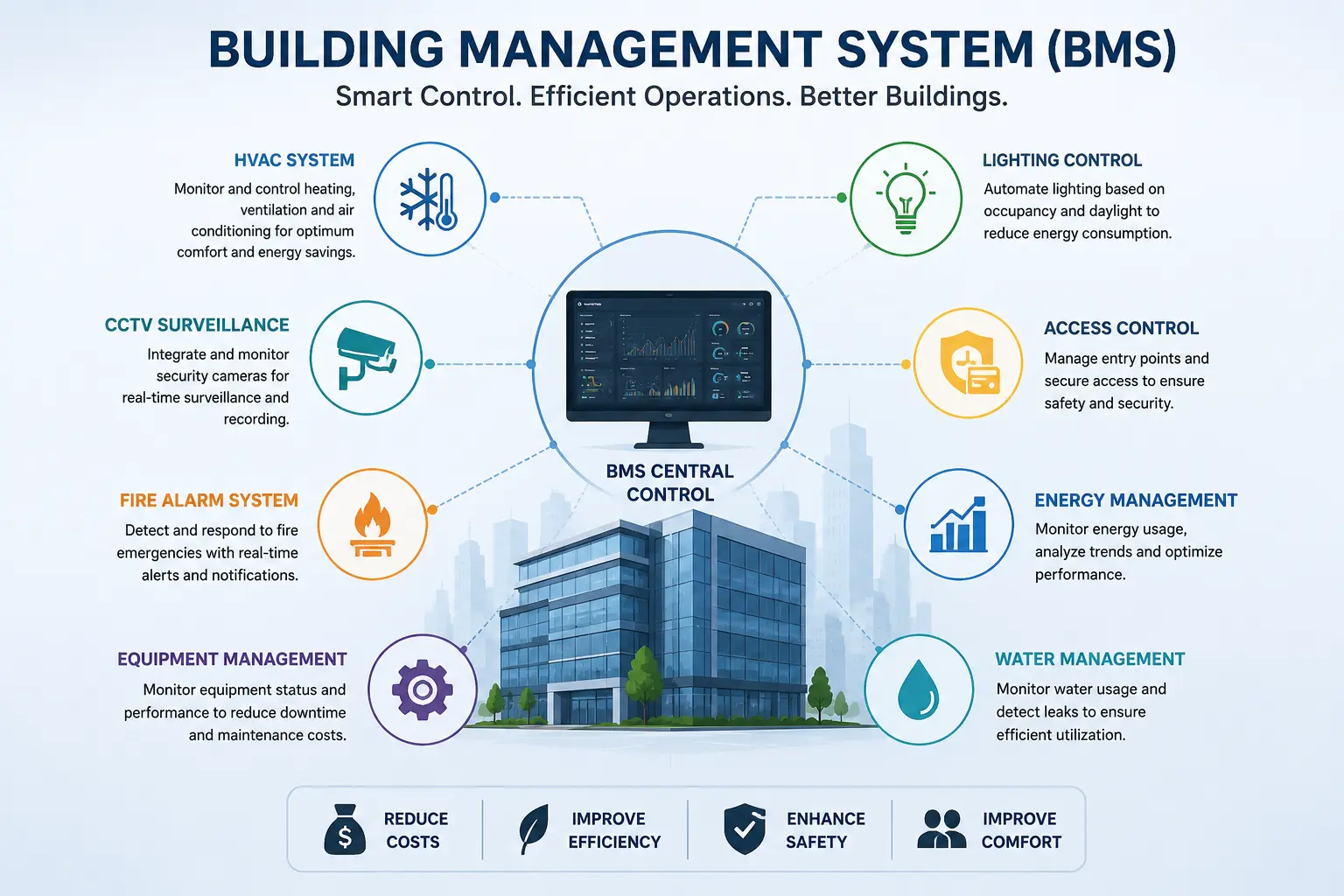
A Building Management System (BMS), commonly referred to as a Building Automation System (BAS), is a centralized software and hardware solution designed to monitor, control, and automate various mechanical, electrical, and safety systems within a building.
Instead of operating multiple systems independently, a BMS integrates them into a single platform, allowing facility managers to monitor real-time performance, automate operations, receive instant alerts, and optimize overall building efficiency.
A modern Building Management System typically integrates:
- HVAC Systems
- Lighting Control Systems
- Fire Alarm Systems
- CCTV Surveillance
- Access Control Systems
- Elevators and Escalators
- Water Management Systems
- Electrical Distribution
- Energy Monitoring
- Pumps and Motors
- Diesel Generator Monitoring
- Solar Power Monitoring
- Indoor Air Quality Monitoring
By continuously collecting data from sensors and connected devices, the BMS automatically adjusts building operations based on occupancy, environmental conditions, schedules, and predefined operational rules.
The result is a safer, smarter, and more energy-efficient building that requires less manual intervention while delivering better occupant comfort.
Why is a Building Management System Important?
Managing a modern building involves much more than simply turning lights on and off. Large facilities contain thousands of interconnected systems that must operate efficiently around the clock.
Without automation, facility teams often face challenges such as:
- High electricity bills
- Equipment failures
- Inconsistent indoor temperatures
- Poor air quality
- Increased maintenance costs
- Manual monitoring of multiple systems
- Delayed fault detection
- Higher operational risks
A Building Management System addresses these challenges by automating routine operations and providing real-time visibility into building performance.
Some of the key reasons organizations invest in a BMS include:
Improve Energy Efficiency
HVAC systems often account for the largest share of energy consumption in commercial buildings. A BMS optimizes HVAC schedules, adjusts cooling and heating based on occupancy, and prevents unnecessary energy usage.
Reduce Operating Costs
Automation reduces manual work, minimizes equipment downtime, and lowers utility bills, resulting in significant long-term cost savings.
Enhance Occupant Comfort
By maintaining optimal temperature, humidity, lighting, and indoor air quality, a BMS creates a comfortable environment for employees, customers, patients, students, and visitors.
Improve Building Safety
Integration with fire alarms, emergency systems, CCTV, and access control enables faster emergency response and improved security.
Support Sustainability Goals
Organizations pursuing green building certifications and ESG initiatives rely on Building Management Systems to reduce carbon emissions and improve energy performance.
How Does a Building Management System Work?
A Building Management System functions by collecting real-time data from sensors installed throughout the building. These sensors continuously monitor environmental conditions and equipment performance.
Typical sensors monitor:
- Temperature and Humidity
- Carbon Dioxide (CO₂) and Indoor Air Quality
- Occupancy and Motion Detection
- Lighting Levels
- Water Flow and Pressure
- Power Consumption and Equipment Status
The collected information is transmitted to programmable controllers that analyze the data and determine the appropriate response based on predefined logic.
For example, if a meeting room becomes occupied, the BMS can automatically:
- Switch on the lights
- Start air conditioning and adjust ventilation
- Monitor indoor temperature
- Turn everything off after the room becomes vacant
Similarly, if a water pump experiences abnormal pressure or a chiller consumes excessive power, the BMS immediately alerts facility managers so corrective action can be taken before a major failure occurs.
All data is displayed through a centralized dashboard where operators can view equipment status, receive alarms, generate reports, monitor energy consumption, schedule equipment, analyze historical trends, and access systems remotely.
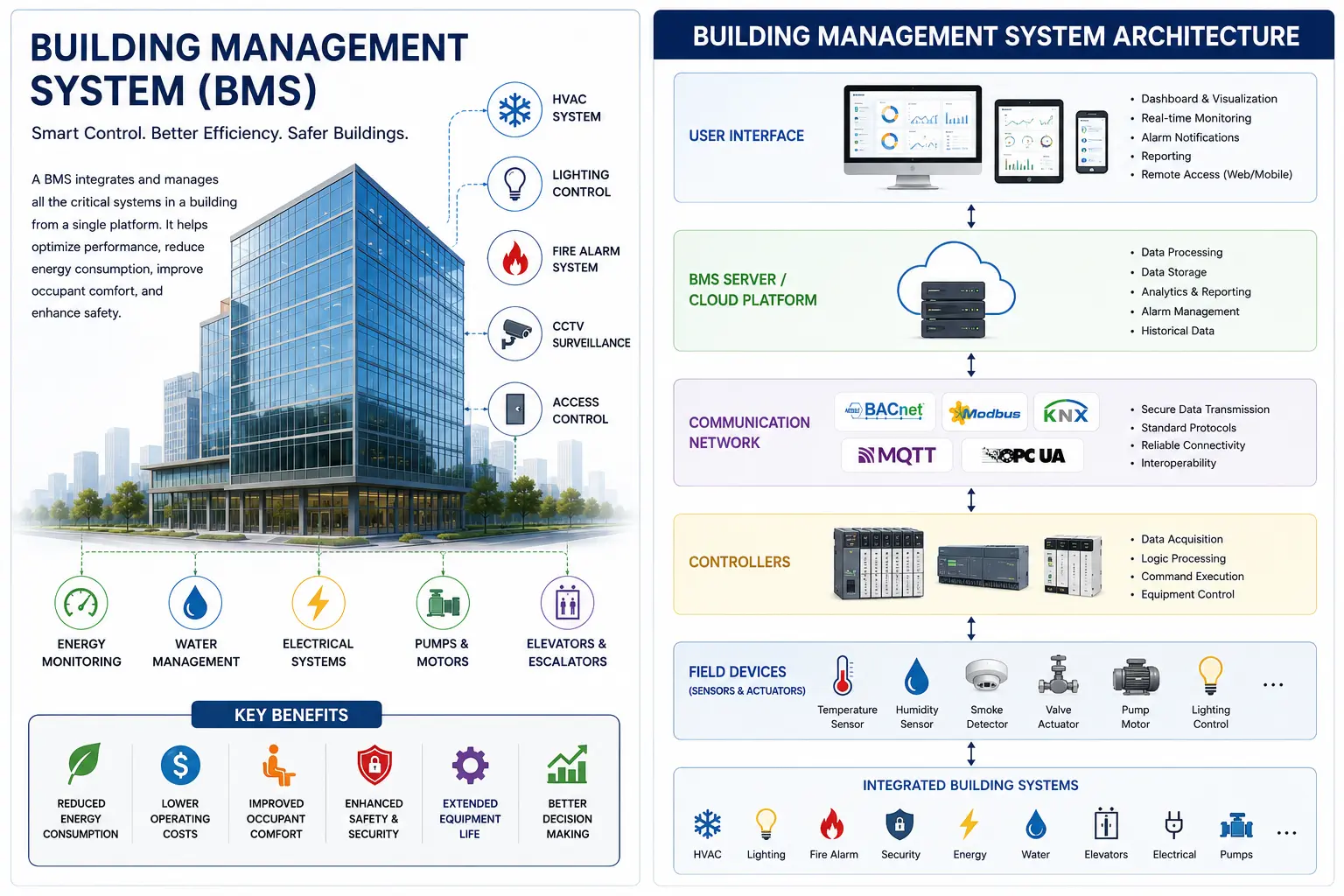
Building Management System Architecture
A typical Building Management System follows a layered architecture.
Field Devices (Sensors & Actuators)
            │
            ▼
Programmable Controllers (PLC/DDC)
            │
            ▼
Communication Network (BACnet, Modbus, KNX, MQTT)
            │
            ▼
BMS Server / Cloud Platform
            │
            ▼
Central Dashboard & Mobile Access
            │
            ▼
HVAC • Lighting • Fire Safety • Energy • Security
Key Components of a Building Management System
1. Sensors
Sensors act as the eyes and ears of a Building Management System. They collect real-time environmental and operational data from different parts of the building, such as temperature, humidity, pressure, and occupancy sensors, as well as smoke detectors, water flow sensors, and power meters.
2. Controllers
Controllers are the brain of the BMS. They receive data from sensors, process information based on programmed logic, and send commands to field devices to automatically regulate HVAC systems, chillers, pumps, lighting, and valves.
3. Human Machine Interface (HMI)
The Human Machine Interface (HMI), often referred to as the BMS dashboard, provides a graphical view of all building systems. Operators can view equipment status, monitor alarms, analyze energy usage, and control systems remotely.
4. Communication Network
The communication network enables all building devices to exchange information. Popular communication protocols include BACnet, Modbus, KNX, LonWorks, MQTT, and OPC UA. Open communication standards make it easier to integrate equipment from different manufacturers.
5. Field Devices
Field devices physically control building operations. Examples include motorized valves, dampers, actuators, VFDs, relays, contactors, pumps, and fans.
Types of Building Management Systems
- Standalone BMS: Controls a single building or a limited number of systems, suitable for small offices or retail outlets.
- Networked BMS: Connects multiple controllers across a building or campus for centralized monitoring.
- Cloud-Based BMS: Enables remote access through secure internet connections for multi-site management and real-time notifications.
- Wireless BMS: Reduces installation costs by minimizing wiring requirements, ideal for retrofitting existing buildings.
- IoT-Enabled Smart BMS: Integrates with IoT devices, AI, machine learning, and cloud analytics for advanced capabilities like predictive maintenance and energy optimization.
Main Functions and Benefits of Implementing a BMS
Implementing a Building Management System offers significant operational, financial, and environmental advantages:
- Lower energy consumption through intelligent HVAC and lighting control.
- Reduced operating costs by automating schedules and minimizing equipment downtime.
- Improved occupant comfort with consistent temperature, ventilation, and lighting.
- Enhanced safety through integration with fire alarms, emergency systems, CCTV, and access control.
- Extended equipment lifespan by enabling preventive and predictive maintenance.
- Better decision-making through centralized dashboards, reports, and analytics.
Applications of Building Management Systems Across Industries
- Commercial Office Buildings: Optimize HVAC and lighting based on occupancy, reducing electricity consumption and improving employee comfort.
- Hospitals and Healthcare Facilities: Maintain precise environmental control in critical areas and manage backup power systems.
- Hotels and Hospitality: Automate room temperature, optimize energy usage, and improve guest comfort.
- Manufacturing Plants: Monitor utility consumption, optimize production environments, and support predictive maintenance.
- Data Centers: Monitor cooling systems, UPS systems, and Power Usage Effectiveness (PUE) to protect critical equipment.
Frequently Asked Questions (FAQs)
What does BMS stand for?
BMS stands for Building Management System.
Can a Building Management System reduce electricity bills?
Yes. By optimizing HVAC schedules, lighting, and equipment operation, a BMS can significantly reduce unnecessary energy consumption.
Why Choose MG TechWorks for Building Management Solutions?
At MG TechWorks, we help organizations build smarter, safer, and more energy-efficient facilities through advanced automation solutions. Our capabilities include Building Management System implementation, IoT integration, energy monitoring solutions, and custom software development.
Conclusion
A Building Management System (BMS) is the foundation of modern smart buildings. By integrating HVAC, lighting, fire safety, security, electrical infrastructure, water management, and energy monitoring into one centralized platform, organizations gain greater visibility and control over their facilities. Investing in the right Building Management System can deliver long-term operational and financial benefits while preparing your organization for the future of smart infrastructure.

MG TechWorks
Subject Matter Expert
MG TechWorks brings years of technical expertise in transformer maintenance and OLTC diagnostics.
Tags
Related Articles

Complete Guide to OLTC Maintenance: Best Practices 2026
Learn essential OLTC maintenance procedures, inspection schedules, and preventive measures to extend transformer life and ensure grid stability.
Transformer Oil Filtration in OLTC Systems: A Complete Field Guide
Learn about transformer oil filtration for OLTC systems. Discover critical oil quality tests, intervals, and the high-vacuum process to prevent failure.
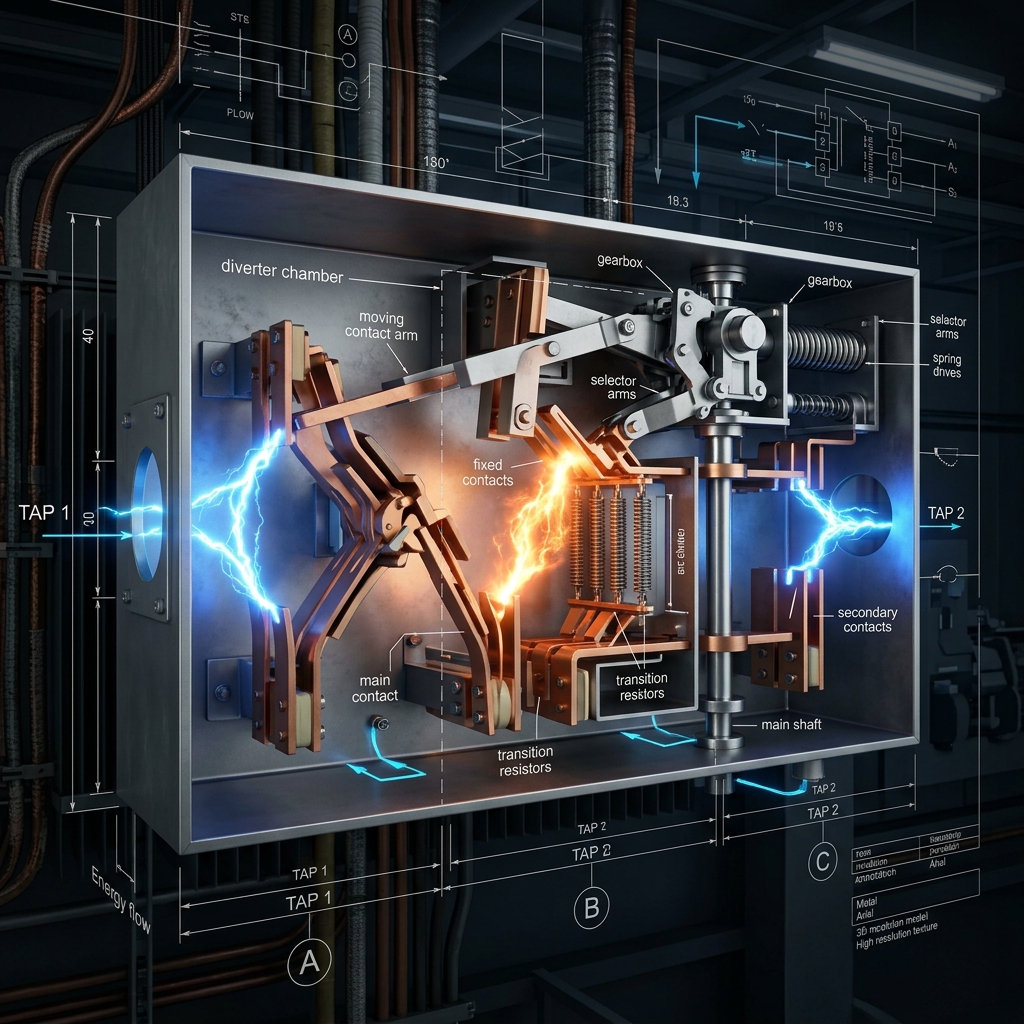
How OLTC Switching Sequences Work: Diverter Switch & Selector Switch Explained
Understand the complex OLTC switching sequence. Learn how diverter and selector switches safely change transformer taps under full load without power loss.